Hot flushes, broken sleep, brain fog: most women know the headline symptoms of perimenopause and menopause. Dry eyes rarely make the list. A survey reported by Optometry Times found that only 14% of women recognised dry eye as a menopause-related symptom, against 79% for hot flushes. With World Menopause Day on 18 October and the heating season under way, it is a good moment to join the dots.
What the survey found
The survey questioned 402 women aged 30 to 80 and over who described themselves as perimenopausal, menopausal or postmenopausal. Almost eight in ten said they were surprised to learn that dry eye can be linked to this stage of life.
For women who did have dry eye symptoms, the effects reached well beyond comfort. More than half said it made reading harder, a similar number struggled with screens, and around a quarter found it affected their driving.
It is worth being clear about what this is. The survey was run online in North America and funded by Bausch + Lomb, a company that makes eye-care products, and it has not been peer reviewed. It tells us about awareness, not about how common dry eye is. But it echoes what UK optometrists see: this autumn’s National Eye Health Week also gave dry eye its own day, highlighting its links with screen use, menopause and ageing.
Why hormones affect your tears
Your tears are more than water. A healthy tear film has an oily outer layer, made by tiny glands along the edge of your eyelids, which stops the tears evaporating too quickly.
As Optometry Times reports, falling levels of oestrogen and androgens around menopause are thought to affect both the glands that make tears and these oil glands. The result can be tears that are thinner, or that evaporate faster, leaving the surface of the eye dry and irritated.
The symptoms are easy to put down to something else. The NHS describes eyes that feel itchy, sore or gritty, look red, become blurry or sensitive to light, and sometimes, confusingly, water more than usual. Many people assume it is tiredness, allergies or too much screen time.
Why winter makes it worse
Menopause rarely acts alone. The NHS lists several everyday factors that make dry eyes more likely, including being over 50, wearing contact lenses, long spells at a screen without breaks, and time in heated or air-conditioned rooms. From October onwards, central heating, car heaters and long evenings indoors on laptops and phones all add up.
That combination is why many women first notice their eyes in the autumn and winter, and why symptoms that were manageable in summer can suddenly feel constant.
What this means for you
- Notice the pattern. If your eyes feel gritty, tired or blurry by the end of the day, especially alongside other menopause symptoms, mention it to your optometrist rather than putting up with it.
- Build in screen breaks. The NHS suggests resting your eyes regularly and keeping your screen just below eye level, so you blink fully and expose less of the eye’s surface.
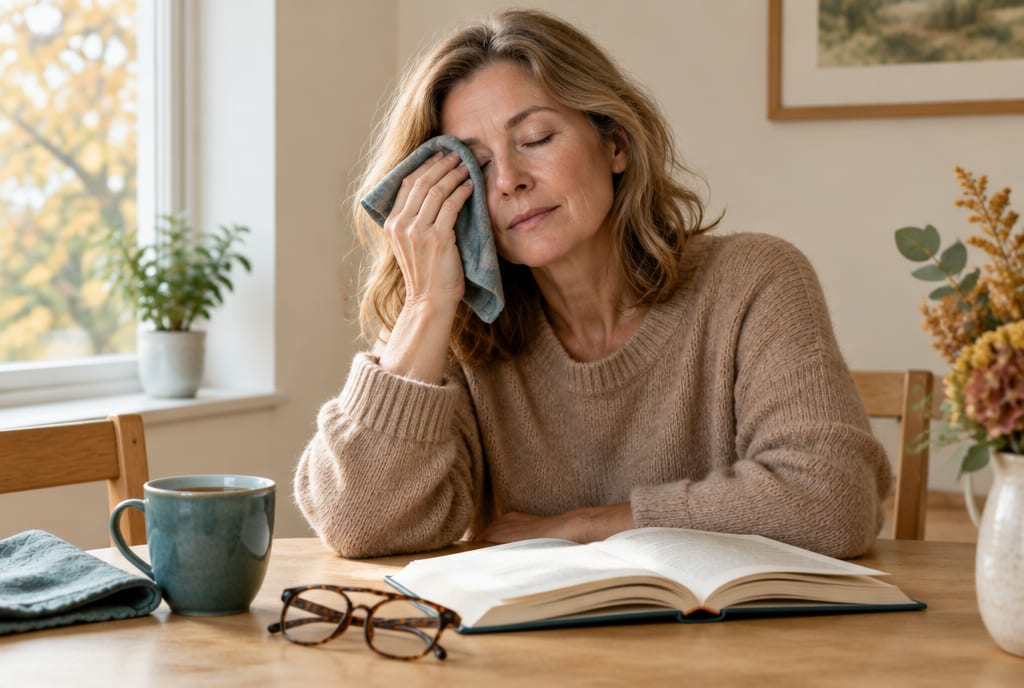
- Look after your eyelids. The NHS recommends cleaning your lids daily: a warm (not hot) flannel, a gentle massage, then a wipe with warm cotton wool. A humidifier can help in heated rooms.
- Get urgent help for warning signs. A painful red eye, a red eye while wearing contact lenses, or any sudden change in vision needs prompt attention, not home remedies.
Finding the cause, not just the drops
Eye drops can soothe, but dry eye has different causes, and the right treatment depends on which one is at work. A proper assessment looks closely at your tear film and the oil glands in your eyelids, so any treatment is matched to what is actually happening.
If this sounds familiar, our Dry Eye Clinic can help. We offer dry eye assessments, in-practice lid treatments and, at our Edgbaston practice, OptiLight intense pulsed light therapy. Call Edgbaston on 0121 456 5676 or Barnt Green on 0121 445 4545 to book a dry eye assessment.